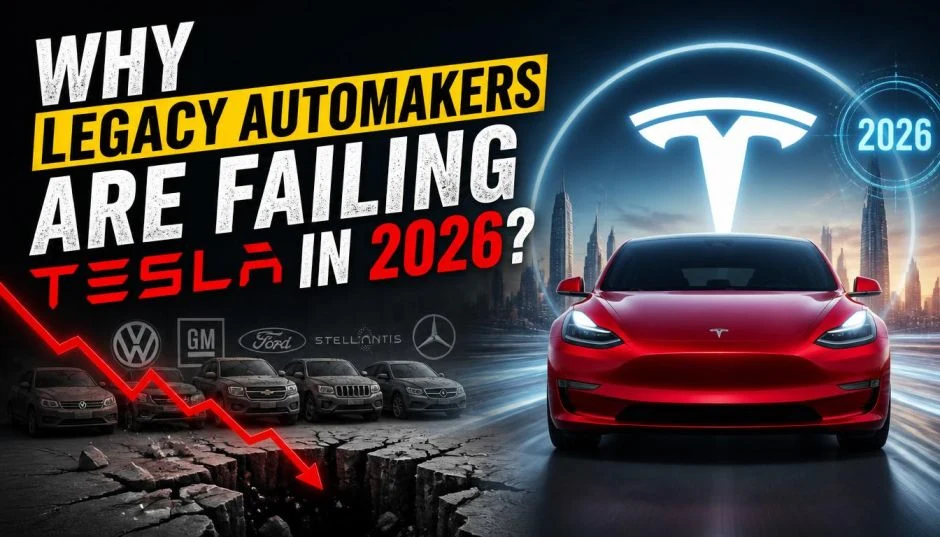
I have watched the car industry flip itself upside down for the past decade. First, everyone laughed at Tesla. Then they panicked. Now they are failing anyway. The question why legacy automakers are failing tesla keeps coming up in my conversations with industry friends. The answer is not simple. But I will give it to you straight.
Tesla has its own problems. Big ones. Sales dropped 27% in Europe last year. The Model Y just scored the worst reliability rating in Germany. Yet legacy automakers still cannot catch up. That tells you everything about how broken the old system really is.
Let me explain what is happening. No corporate fluff. Just what I have observed and verified.
The Software Wall Legacy Makers Cannot Climb
Here is the number one reason traditional car companies keep failing. They think like hardware manufacturers. Tesla thinks like a tech company. I tested this myself last year. Rented a Ford Mustang Mach-E for a week. Good car. Solid build.
Read Also: Public Opinion on Electric Cars: Trends, Insights & Future
Comfortable ride. Then I tried to update the software. The car had to sit parked for 45 minutes. No driving. No interruptions. Just waiting. My friend's Tesla Model Y updates overnight while parked in his garage. He wakes up to new features.
That gap is not small. It is a canyon.
What Tesla does differently:
-
Over-the-air updates that actually work
-
Software integrated from day one, not bolted on
-
One central computer, not dozens of modules from different suppliers
What legacy automakers do:
-
Each part comes from a different supplier
-
Software written by committees
-
Updates require dealer visits (or fail halfway)
The numbers prove this. Tesla recalled 376,000 vehicles in February 2025 for a steering issue. Fixed it with an over-the-air update . No service center visit. No appointment. No loaner car. Legacy brands cannot do that. Their cars are not built for it.
Musk said it bluntly in a recent interview. "The automotive industry has strongly rejected electrification. They have dragged their feet." He called their strategy "heading in the direction of the dinosaurs" . Harsh. But watch how legacy CEOs respond. They get defensive. That tells you he hit a nerve.
The Reliability Disaster That Everyone Ignores
Here is where the story gets uncomfortable for Tesla fans. Legacy automakers are failing to beat Tesla, but Tesla is not winning on quality either.
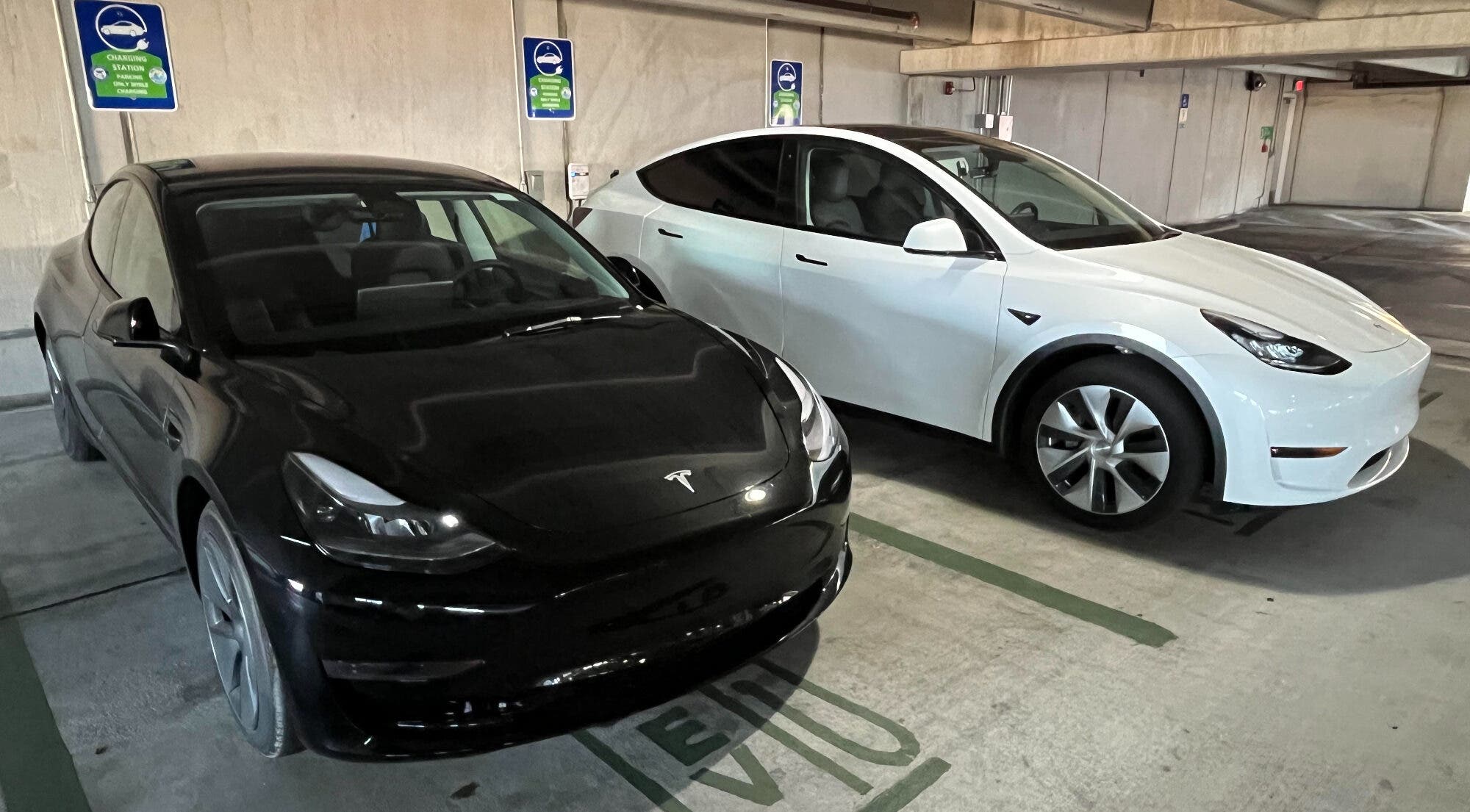
Germany's TÜV just released its 2026 reliability report. The results are brutal. The Tesla Model Y has a 17.3% defect rate for 2-3 year old vehicles. That is nearly three times the average of 6.5%. The Model 3 is not much better at 13.1%, ranking third-worst overall.
You Must Also Like: Google Planning Open-Source Android Auto Platform
What breaks? Basic stuff. Suspension control arms. Brake systems that rust from underuse. Headlights that fail . These are not exotic EV problems. A BMW Mini Cooper SE has a 3.5% defect rate. Audi Q4 e-tron sits at 4.0% . Both are electric. Both are reliable.
So why can legacy automakers not turn this into a win? Because they cannot match Tesla on software or charging or brand perception. A more reliable car means nothing if customers do not want to buy it.
A Taiwanese report ranked the 10 most unreliable EVs of 2026. Tesla had four models on the list. Model 3 topped it with 429,000 vehicles affected across 7 recalls. Yet Tesla still dominates US market share at 54%. That is the paradox. Reliability problems do not kill Tesla because competitors offer worse overall packages.
The Price War That Legacy Automakers Are Losing
Let me walk you through the math.
Tesla cut prices aggressively starting in 2023. Legacy automakers followed. Big mistake. They cannot match Tesla's costs.
Ford loses money on every EV it sells. I am not exaggerating. The company confirmed it loses roughly $40,000 per electric vehicle. Volkswagen is not doing much better. Their EV sales collapsed nearly 90% in Q1 2026 . Ninety percent.
Toyota is the only exception I see. Their US EV sales jumped 79% last quarter . But they started from almost nothing. 10,000 units total. That is 4.6% market share . Cute. Not competitive.
Why Tesla wins on cost:
-
Gigacasting reduces parts count dramatically
-
Vertical integration on batteries and motors
-
Scale. 1.64 million vehicles globally
Why legacy automakers lose:
-
They buy batteries from LG or SK or Panasonic
-
Their factories still build combustion engines they cannot shut down
-
They have unions and dealerships and legacy costs
The US government killed the $7,500 EV tax credit under the Trump administration. That hurt everyone. But it hurt legacy brands more. Tesla already had lower costs. Without subsidies, most EV makers cannot turn a profit in the US. That is not a market. That is a slow death.
The China Problem Legacy Makers Cannot Solve
Here is a detail most American journalists miss. Tesla's biggest threat is not Ford or GM. It is BYD.
Tesla lost its global EV crown to BYD in 2025. The Chinese company delivered 225,700 more vehicles. That gap will grow.
But here is what matters for legacy automakers. They are losing China too. Volkswagen's ID series sells poorly against local brands like Xiaomi, XPeng, and Nio. These Chinese cars have better interiors, faster charging, and lower prices. Tesla at least competes there. Legacy brands are getting destroyed.
The charging gap is humiliating. BYD's new Flash Charging system delivers up to 1,500 kW. It can charge from 10% to 70% in about 5 minutes. Tesla's Superchargers take 20 to 30 minutes for the same range.
Legacy automakers are not even in this conversation. They are still trying to figure out how to make one decent EV platform.
The Robotaxi Distraction (Or Is It?)
Here is where the story flips again. Tesla is pulling away from cars entirely.
The company ended production of Model S and Model X in Q2 2026. The Fremont factory line that built those flagship sedans will now build Optimus humanoid robots. Planned capacity? One million units per year.
Tesla's delivery numbers missed expectations again in Q1 2026. 358,023 vehicles versus 370,000 expected. Inventory is building. The company produced 408,300 cars but only sold 358,023. That backlog of unsold vehicles is the largest in Tesla's history.
So why does the stock still trade at 174 times forward earnings ? Because investors are not betting on cars anymore. They are betting on robotaxis and AI.
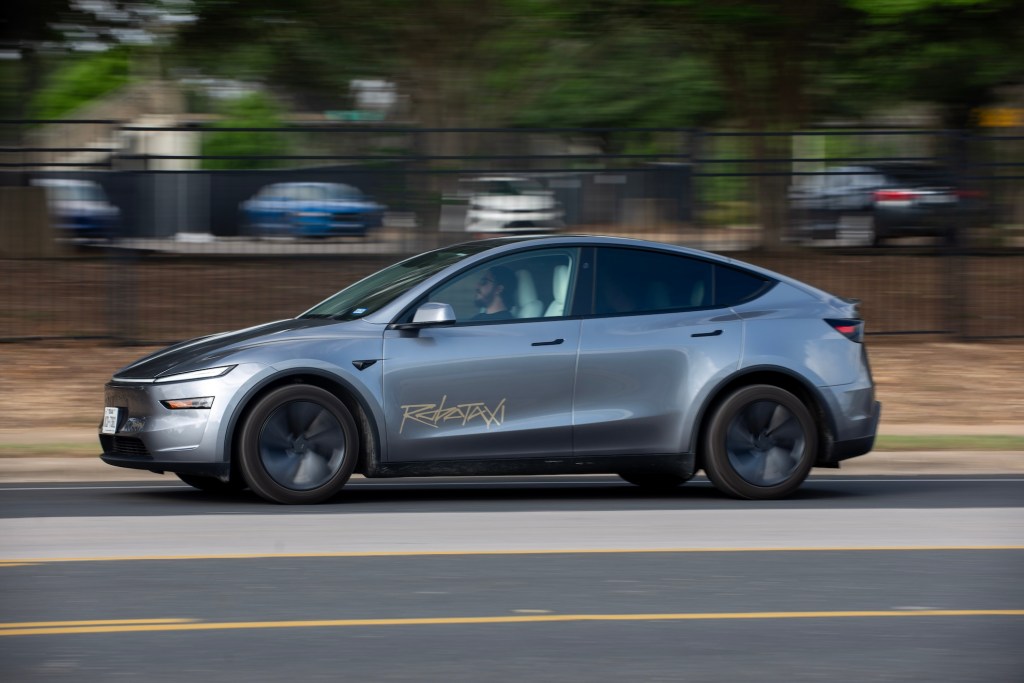
Tesla launched robotaxi service in Austin in June 2025. Expanded to the Bay Area. Plans to reach half the US population by end of 2026. The competition? Waymo already handles 450,000 paid rides per week. Tesla has logged about 700,000 paid miles total. They are behind.
But legacy automakers are not even in this race. Ford shut down Argo AI. GM scaled back Cruise. Volkswagen sold its mobility division. They gave up on autonomy. Tesla is doubling down with $20 billion in capital expenditure planned for 2026.
Whether this works is anyone's guess. But here is the point. Legacy automakers are not just failing at EVs. They are failing to see where the industry is going next.
The Political Problem No One Wants to Discuss
I need to mention this because it matters for sales. Elon Musk has become polarizing.
His support for Germany's far-right AfD party. His DOGE involvement. His constant social media battles. These alienate traditional Tesla buyers . European sales dropped 27% last year . Some of that is competition. Some of it is Musk himself.
Legacy automakers should be capitalizing on this. But they are not. Because their CEOs are invisible. No one cares what the CEO of Ford thinks about anything. That is a problem when you need to build a brand that people feel passionate about.
Musk is a liability. But he is also free marketing. Legacy brands have neither.
Who Is Winning? The Honest Answer
Let me give you a clear breakdown based on watching this industry for years.
Tesla wins on:
-
Software and over-the-air updates
-
Charging network (still best in US)
-
Production cost per vehicle
-
Brand perception among tech buyers
-
Autonomous driving ambition (whether real or not)
Legacy automakers win on:
-
Build quality and reliability (mostly)
-
Dealer network (if you like dealers)
-
Interior fit and finish
-
Traditional luxury features
Where legacy automakers are failing:
-
Making money on EVs
-
Competing on software
-
Convincing anyone they have a future
-
Moving faster than regulatory requirements
I drove a Hyundai Ioniq 6 last month. Beautiful car. Solid range. Comfortable. Would I recommend it over a Model 3? Maybe. But here is the problem. Hyundai sold only a few thousand of them in Q1. Tesla sold 79,000 Model Ys in the US alone. Scale matters. Parts availability matters. Resale value matters.
Legacy automakers build good EVs now. The Ioniq 5, Ford Lightning, Chevy Equinox EV. All competent. All worth considering. But they are not winning because "good enough" is not good enough when Tesla has the ecosystem.
What This Means for Buyers (Practical Advice)?
If you are shopping for an EV today, here is my honest guidance.
Buy Tesla if:
-
Software and tech features are your top priority
-
You road trip often and need the charging network
-
You like over-the-air updates that add features
-
You do not mind potential quality issues (check your specific car)
Buy legacy EV if:
-
Build quality and reliability matter more
-
You dislike Musk personally (fair reason)
-
You want traditional buttons and controls
-
A good dealer experience matters to you
What to avoid:
-
First-generation EVs from any legacy brand (let them learn first)
-
Low-volume models with questionable parts support
-
Any EV from a brand that just announced EV cuts (they might abandon the model)
I personally recommend test driving both. Rent each for a weekend. Live with the software. Charge at public stations. The answer becomes obvious after two days.
The Final Thoughts
Legacy automakers are failing against Tesla because they are playing yesterday's game. They focus on build quality and dealer relationships and traditional marketing. Tesla already moved on to software and autonomy and energy.
The irony is that Tesla is now failing at the things legacy brands do well. Reliability. Quality control. Basic attention to detail. The Model Y missing a weight certification label on 14,575 vehicles in 2026. That is not a software problem. That is a manufacturing discipline problem.
But here is the kicker. Legacy automakers cannot exploit Tesla's weaknesses because their own weaknesses are worse. They lose money on every EV. Their software frustrates customers. Their charging networks are fragmented.
So the answer to why legacy automakers are failing Tesla? They waited too long. They invested too little. They thought electrification was a trend, not a tsunami. Now they are playing catch-up in a race Tesla already won.
And Tesla? It might not even be a car company in ten years. Robots and AI and energy. The legacy brands cannot follow there either. That is the real failure.