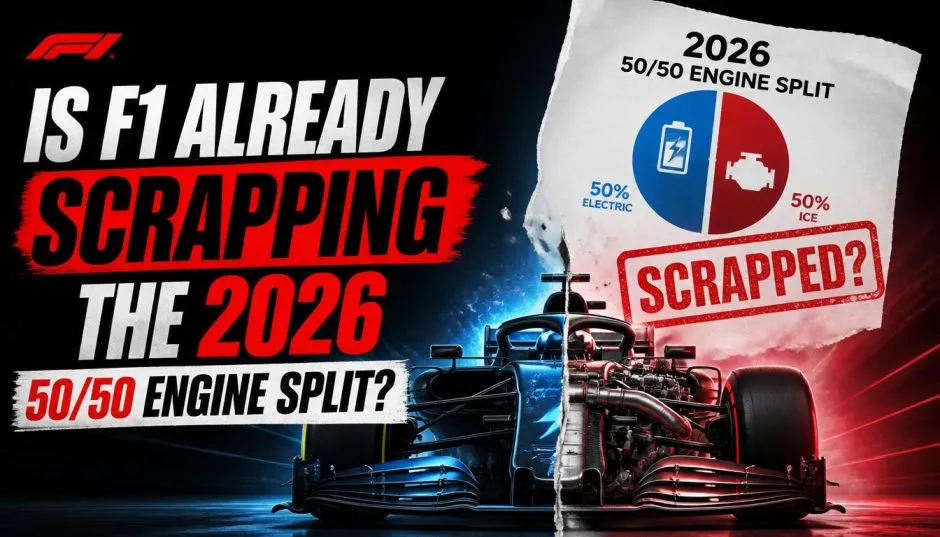
The short answer is yes. The F1 2026 regulations engine 50/50 split is effectively dead. Not officially buried yet. But the sport's governing body, the FIA, agreed in principle on May 7, 2026, to shift the power balance to 60% internal combustion and 40% electric from 2027 onward.
That is a massive reversal for rules that only took effect this season. Drivers called the 50/50 split undriveable. Max Verstappen threatened to quit.
And now, after just five races, the sport is scrambling to fix its own creation. This article tells you what happened, why the split failed, and who wins from the change.
The 50/50 Split: What Was It Supposed to Do?
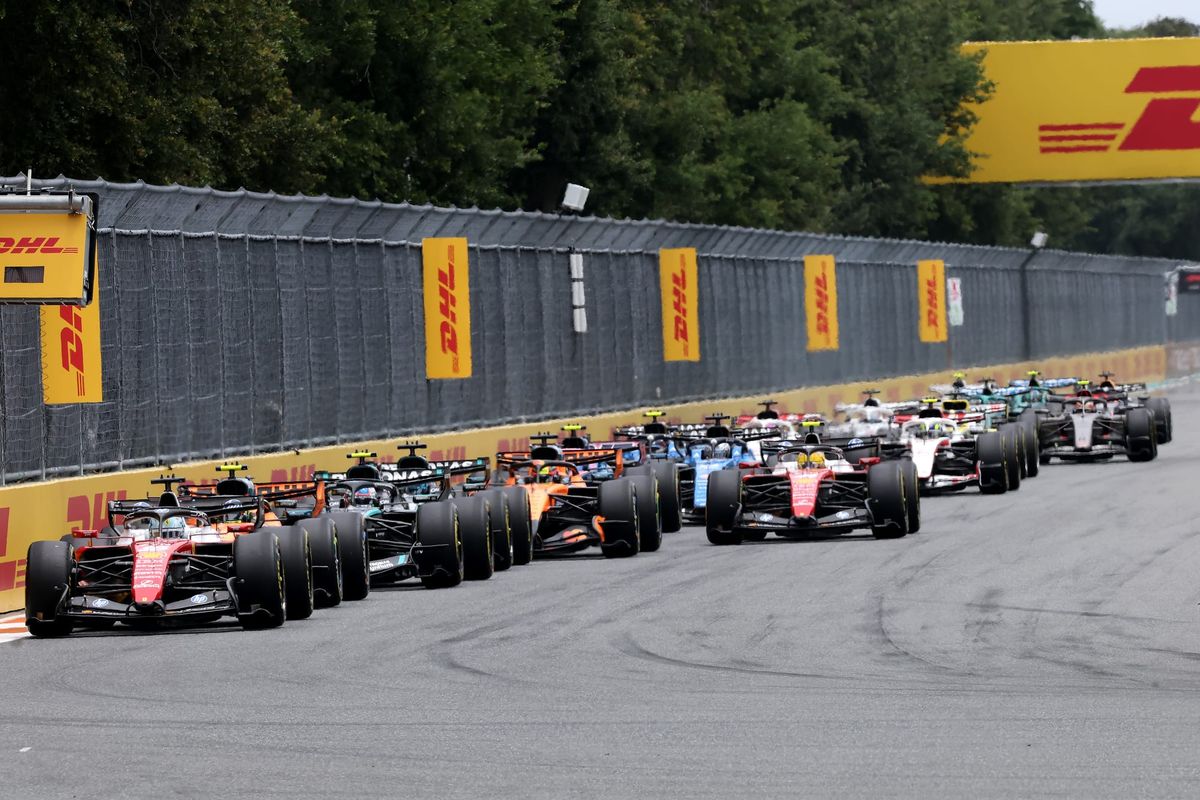
Let me go back to the original plan. About 350kW from each side. The goal was simple. Attract new manufacturers like Audi and Honda. Show that F1 cares about hybrid tech. Make the sport look green.
Read Also: History of Formula 1 Rules: How Regulations Shaped the Sport
But here is what the FIA did not calculate properly.
Do the math. You cannot generate enough electricity to cover 60 seconds of power demand from only 20 seconds of braking. Something has to give.
That "something" is the throttle. Drivers spend half the lap lifting and coasting, charging batteries instead of racing. Verstappen called it "mentally not doable".
What Actually Happened on Track?
The 2026 season started in Melbourne on March 8. Mercedes dominated immediately. George Russell won. Kimi Antonelli finished second. But the talking point was not the racing. It was the strange driving. Cars slowed dramatically on straights. Fans saw "superclipping" for the first time.
In Japan, that gap caused a crash. Ollie Bearman hit Franco Colapinto from behind. Bearman's car suffered a 50G impact. The FIA realized they had a safety problem, not just a racing problem.
The F1 2026 regulations engine 50 50 split Mercedes actually worked well for Mercedes. Their power unit handled the energy management better than anyone else's. But even their drivers complained. The rules were bad for everyone. Some teams just suffered more.
The Miami Fix: First Aid for a Broken Rulebook
The FIA did not wait for the end of the season. They called an emergency meeting. On April 20, 2026, they announced immediate fixes for the next race in Miami .
Here is what changed for qualifying:
-
Cars now harvest less energy (7MJ instead of 8MJ per lap)
-
They can charge with more power (350kW instead of 250kW)
-
Superclipping only lasts 2-4 seconds per lap instead of constant management
For the race, the FIA reduced the power of the Boost button and limited MGU-K power to 250kW except in key acceleration zones .
The FIA said these changes "delivered improved competition" . Drivers agreed it was a step forward. But nobody called it a fix. Lando Norris said: "It's a step in the right direction, but it's not the fix".
The 2027 Plan: Scrapping the 50/50 Split Entirely
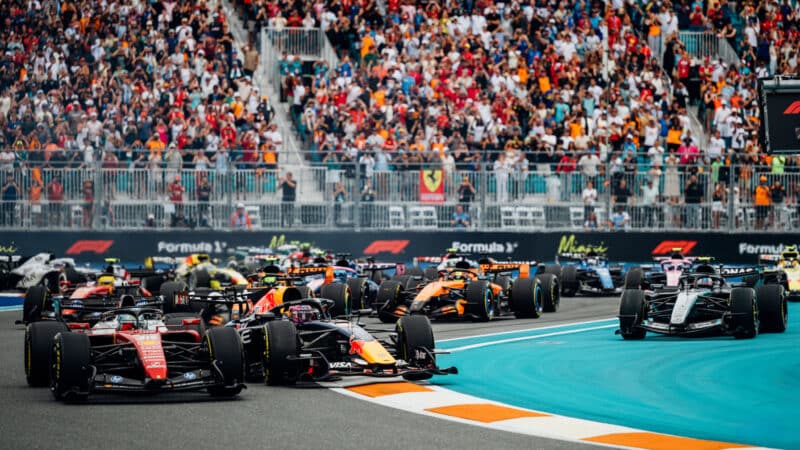
Here is where the real story starts.
On May 7, 2026, the FIA, FOM, and all five power unit manufacturers met online. The outcome was dramatic. They agreed in principle to abandon the 50/50 split from 2027.
You Must Also Like: Decoding F1 Aerodynamic Evolution: How Active Aero is Redefining Cornering Speed?
The new target: 60% internal combustion, 40% electric.
That means the ICE power increases by about 50kW. Fuel flow goes up. Electric deployment drops by about 50kW. The car will rely less on battery power. Drivers can stay on throttle longer.
Isack Hadjar welcomed the change. "With what they agreed on, it can only go in the right direction," he told AFP. Verstappen said the planned changes would return racing "almost back to normal".
But the FIA statement used careful language. "Agreed in principle." That means not final. Not yet voted on. And there is opposition.
Who Is Blocking the Change? The Manufacturer War
The F1 new regulations after 2026 face political problems. Not technical ones.
Mercedes and Red Bull support the change. But other manufacturers have concerns. Audi has issues with cost. Ferrari is worried about losing development opportunities they already invested in.
Here is the reality. Teams started designing their 2026 cars years ago. They spent millions on the 50/50 split rules. Changing the balance to 60/40 means redesigning parts of the power unit and the chassis. Ayao Komatsu, the Haas team principal, put it bluntly. It's ridiculously expensive, he said.
That plan is now impossible if the rules change. Komatsu is begging the FIA not to raise the budget cap just to fix a broken rulebook. This is the real tension. Drivers want better racing. Manufacturers want to protect their investments. Smaller teams want to avoid bankruptcy.
The Mercedes Advantage: Why This Fight Exists
Let me address the F1 2026 regulations engine 50 50 split Mercedes question directly.
Why is Mercedes involved in every headline about this?
Because Mercedes got the 50/50 split right. Their engine works better than anyone else's under the current rules. In Melbourne, they finished first and second . Their power unit manages heat and energy recovery more efficiently.
Any change to the rules risks taking away that advantage.
But here is what the headlines miss. Mercedes actually supports the 60/40 shift. Toto Wolff knows the product is bad for F1. Winning every race under broken rules is not a victory. It is a hollow trophy.
The real opposition comes from Audi and Ferrari. They invested heavily in the 50/50 formula. Changing it now means their development work is partially wasted.
What the Drivers Actually Think (Straight from the Source)
Motorsport.com gathered driver reactions to the proposed 60/40 split. Here is what they said.
Max Verstappen: "It's definitely heading into a very positive direction. It's the minimum I was hoping for."
Lando Norris: "We all welcome that as drivers. It will eliminate a lot of the talks we have about not going on throttle."
Charles Leclerc: "We need to be cautious. Every team has very different designs. Finding something that is fair for everybody is complex."
Carlos Sainz: "For drivers, purists, we will always believe 60-40 is still not enough. But it's something you can race with until real engines come back in 2030."
Fernando Alonso: "The DNA of these power units will always be the same. It will always reward going slow in the corners."
The honest take? Drivers want the 50/50 split gone. But they know 60/40 is a bandage, not a cure.
The Physics Problem Nobody Can Solve
Let me explain why the 50/50 split was doomed from the start.
Gary Anderson did the math in his column. On an average circuit, a driver wants full power for 60% of the lap. Heavy braking accounts for only 15% of the lap. That is your harvesting window.
Anderson estimated that with a 4MJ battery pack, the MGU-K can supply full power for roughly 11.5 seconds before the battery is empty . On a 100-second lap, that is nowhere near enough.
When the battery dies, power drops from around 940bhp to 590bhp. That is why cars slow down on straights. That is why drivers lift and coast.
The 60/40 split helps. More ICE power means less reliance on the battery. But the fundamental problem remains. The same motor harvests and deploys. You cannot escape that trade-off without changing the hardware.
Piastri said it best: changing the split without changing the hardware is "not the full fix".
What This Means for Different Audiences?
For F1 fans: The racing will improve in 2027. But do not expect miracles. The cars will still lift and coast. Just less often. The real fix comes in 2030 when F1 plans completely new engines.
For fantasy F1 players: Do not pick drivers based on 2025 data anymore. Energy management is the new skill. Verstappen and Hamilton adapt fastest. Young drivers struggle with lift-and-coast strategies.
For investors in F1-related stocks: Watch the manufacturer war closely. Mercedes proved their engine works. But if the rules shift to 60/40, the playing field changes. Audi and Ferrari may close the gap. Liberty Media (FWONA) benefits from better racing, not from who wins.
For anyone buying tickets to a 2026 race: Manage your expectations. The cars sound different. Less engine noise. More electric whine. And the on-track action includes strange moments where cars slow down for no obvious reason. That is not a breakdown. That is harvesting.
Will the 2027 Changes Actually Happen?
Here is the honest answer. Maybe.
The FIA announced an "agreement in principle" on May 7. But that is not a vote. The World Motor Sport Council still needs to approve the changes. And the power unit manufacturers get a vote too.
Mercedes and Red Bull support the change. Audi has cost concerns. Ferrari has development concerns . If two manufacturers block the move, it may not pass.
Verstappen is watching closely. He said after qualifying in Canada: If the FIA is strong, and also from the F1 side, they just need to do it. That is a warning. If the change does not happen, Verstappen has threatened to quit at the end of this season.
The FIA knows the stakes. A four-time world champion walking away because the rules are broken is a bad look. They will push hard to get the 60/40 split approved.
But nothing in F1 politics is easy.
Final Verdict: The 50/50 Split Is Dead
The F1 2026 regulations engine 50/50 split lasted less than one full season. Five races. That is all it took for everyone to realize it was a mistake.
Drivers hated it. Fans were confused. The racing was strange. And there was a real safety risk when cars suddenly slowed by 30 km/h on straights.
The FIA moved fast. Immediate fixes in Miami. A planned overhaul for 2027. The 60/40 split is not perfect. But it is better. And it shows that F1 can admit when they get it wrong.
The political fight is not over. Audi and Ferrari may still block the changes. Smaller teams like Haas are worried about the cost. But the direction is clear. The 50/50 experiment is over.
Now the question is not whether the split will change. It is whether the change comes fast enough to keep Verstappen in the sport.